
October 8, 2026
What a Sioux Falls Winter Does to a Wood Deck
The frame takes the weather first
Homeowners in Sioux Falls usually notice the surface first: a gray board, a loose nail, a railing that wobbles. The part that decides whether the deck is worth repairing is underneath. Joists that stay wet, posts set too close to the soil, and ledger connections that have opened up are what a freeze-thaw cycle keeps working on.
Tea, Brandon, and Harrisburg get the same pattern. Snow sits on the deck, melts against the house, and refreezes. If water has a place to stand against the ledger or inside a rim joist, that is where the structure starts to soften.
Boards and railings tell a different story
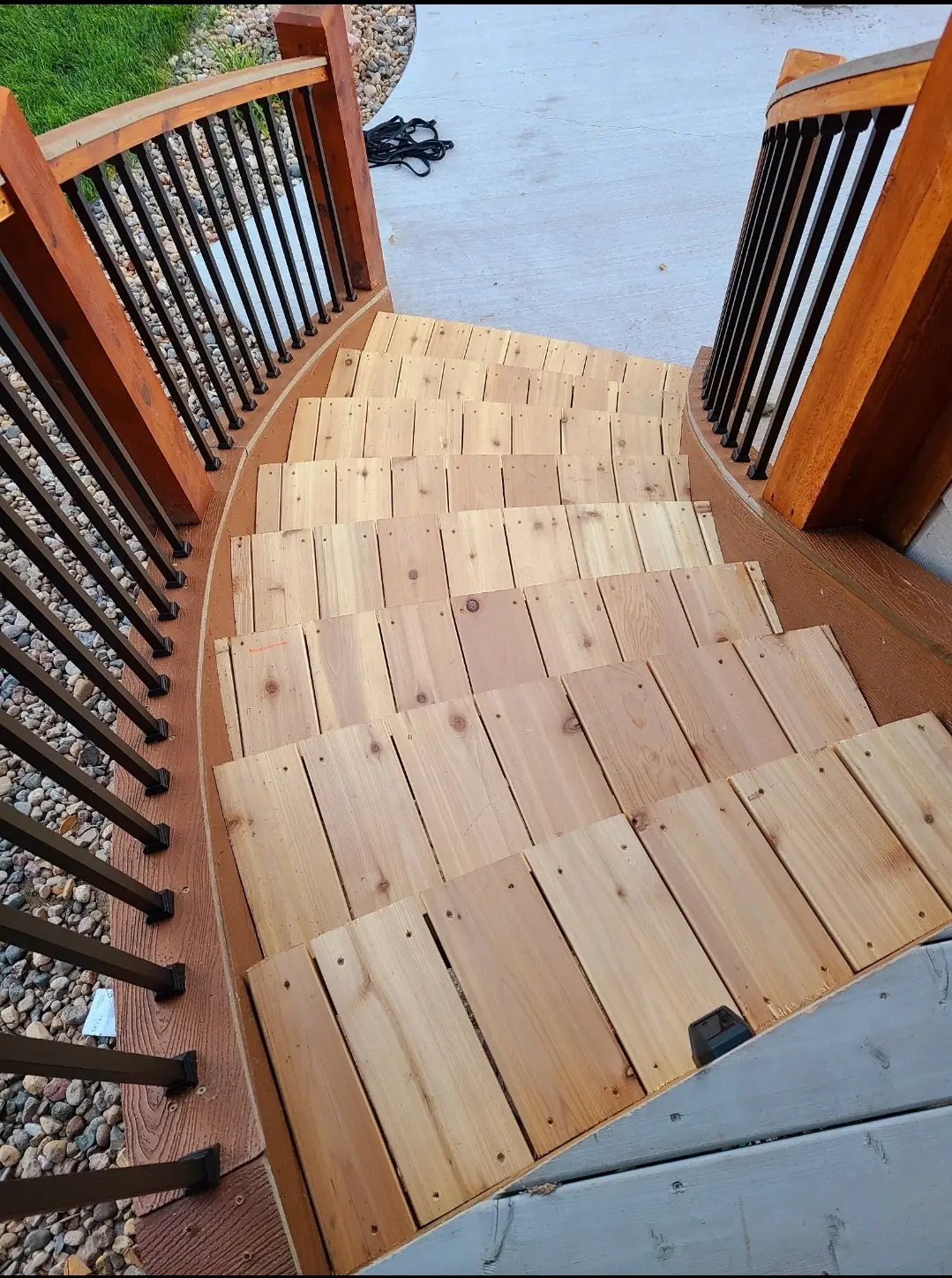
Surface boards can look tired and still be sitting on a sound frame. Cupping, splinters, and faded stain are finish problems. A soft spot that gives underfoot, a post that rocks, or a stair stringer pulling away from the landing is a structure problem. Those two jobs are not the same quote.
Railings fail in the connections more often than in the wood itself. A cap that looks fine can be held by fasteners that have worked loose after several winters. That is worth checking before anyone talks about a new stain color.
What we look at before recommending a rebuild
On a site visit we look at the ledger, the posts, the joist spacing, and how water leaves the deck. A deck that still has a solid frame can often take new boards and railings. A deck whose frame is crushed, twisted, or fastened into rotten rim material needs to be rebuilt, not skinned over.
If you are in Sioux Falls or the towns around Tea and the deck has started to move, call 3 Generations Inc. and we will tell you which of those two it is before anyone prices a full replacement.